

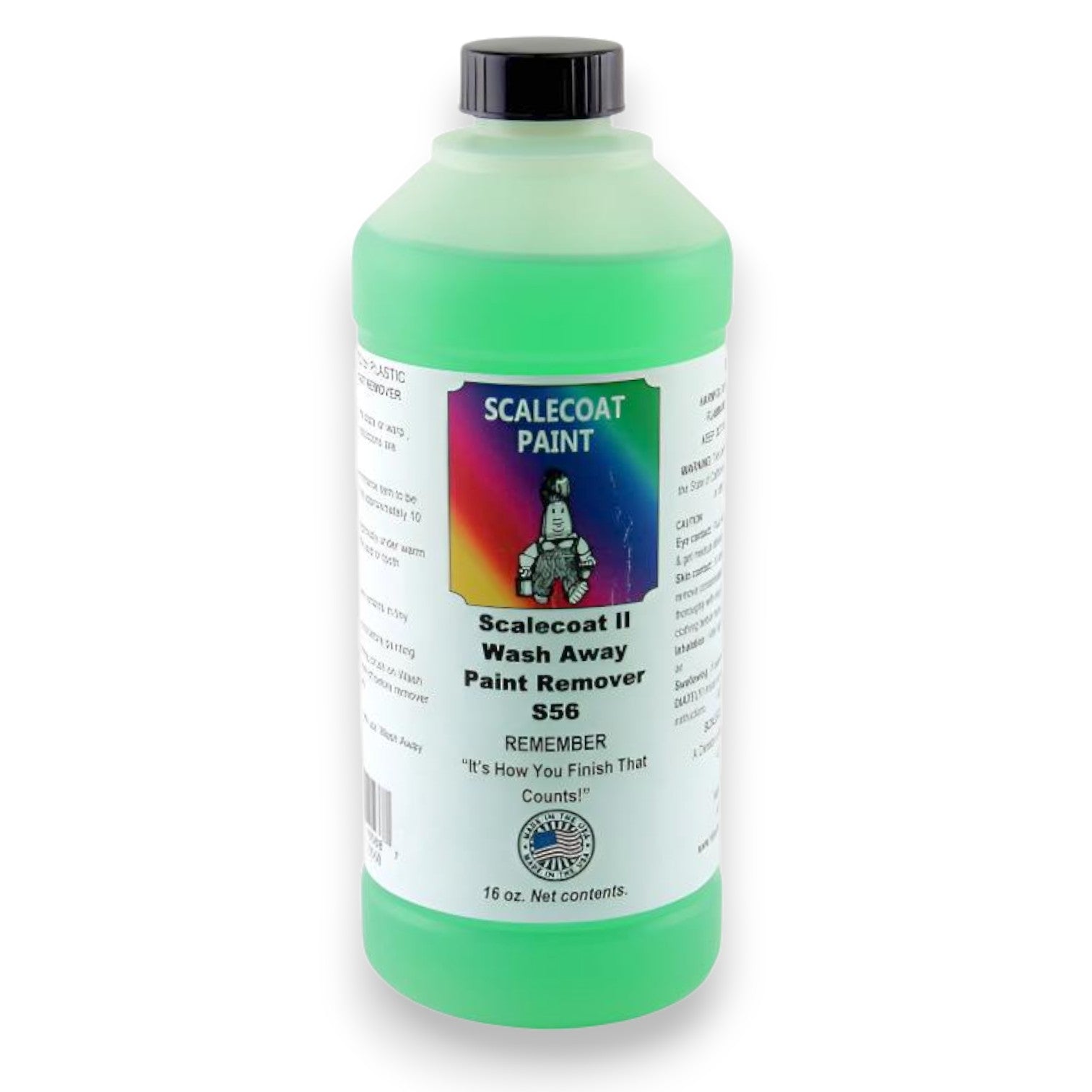
Scalecoat Wash Away — The Plastic-Safe Paint Remover Trusted by Modelers Everywhere
At Fusion Scale Hobbies, we’ve watched Scalecoat Wash Away help model railroaders rescue shells and redo paint jobs for decades. Here’s the big news: Wash Away isn’t just for trains. It’s a remarkably reliable paint remover for plastic models of all kinds—perfect when you need to strip paint from model car kits, aircraft, and military armor without softening plastic or erasing fine detail. In this long-form guide, we’ll show how to use it, what it removes, and why it beats harsh DIY strippers.
Buy Scalecoat Wash Away (SCP10568) at Fusion Scale Hobbies
- What is Wash Away?
- Who it benefits: cars, aircraft, armor & trains
- Paint compatibility & performance
- How to strip paint safely: step-by-step
- Best practices, troubleshooting & finishing
- 3D prints, urethane resin & clear parts
- Comparison chart: Wash Away vs common strippers
- FAQ — quick answers
- Related products & supplies
- Why buy from Fusion Scale Hobbies
What Is Scalecoat Wash Away?
Scalecoat Wash Away is a purpose-built model train paint remover that earned its reputation by stripping Scalecoat I/II and other hobby paints from injection-molded shells without melting styrene or softening crisp detail. That same chemistry makes it a standout paint remover for plastic models beyond railroading—especially where delicate panel lines, rivets, vents, or texture must be preserved.
- Plastic-safe: Formulated for polystyrene and ABS used in kit manufacturing.
- Versatile: Removes hobby lacquers, enamels, and many acrylics (brand list below).
- Reusable: Strain and store; a single batch can handle multiple projects.
- Detail-friendly: Coaxes paint off instead of “attacking” the substrate.
Who Benefits from Wash Away? (Spoiler: Not Just Railroaders)
While Wash Away was born in the rail hobby, we regularly help builders from every corner of scale modeling. If you need to strip paint from model car kits, redo an aircraft camo, or reset a weathering pass on armor, Wash Away is a safe, steady choice.
Model Cars & Racecars
Wash Away works beautifully on bodies from AMT, Revell, Monogram, Moebius, Tamiya, Fujimi, and others. Strip old lacquer or enamel, correct color, or rescue vintage “glue bombs” without rounding panel lines or losing emblem detail.
Aircraft
For builders of Hasegawa, Tamiya, Eduard, Airfix, Trumpeter, etc., Wash Away helps fix paint mistakes and redo multi-color schemes while protecting fine surface texture and rivet detail.
Armor & Military
Tanks and AFVs from Tamiya, Trumpeter, Meng, Dragon, Academy, Italeri often carry subtle casting textures; Wash Away won’t burnish those away like harsher strippers can.
Model Trains
The original home turf: Athearn, Atlas, Walthers, Kato, Rapido shells all benefit from Wash Away’s track record as a model train paint remover that preserves crisp tooling.
(Scalecoat remains the brand manufacturer; Fusion Scale Hobbies is an authorized retailer carrying a deep Scalecoat selection for trains and plastic kits alike.)
Paint Compatibility & Performance
Wash Away removes a wide range of hobby coatings. Performance depends on paint chemistry, thickness, and cure age, but for most hobby scenarios it’s efficient and predictable.
| Paint Brand | Typical Chemistry | Expected Result | Notes |
|---|---|---|---|
| Tamiya | Lacquer & Acrylic | Excellent | Lacquers lift quickly; acrylics usually soften within a standard soak. |
| Revell / Model Master / Testors | Enamel & Lacquer | Excellent | Older enamels may require a second pass; detail stays sharp. |
| Vallejo | Water-based Acrylic | Very Good | Often loosens in shorter soaks; soft brush removes residue cleanly. |
| Mission Models Paint | PU-modified Acrylic | Good–Very Good | More cross-linked; allow more dwell time; re-soak if needed. |
| MCW Finishes | Lacquer & Enamel | Excellent | Car bodies clean up without attacking styrene edges. |
| Tru-Color | Solvent-based Acrylic | Excellent | Responds well to standard soak times. |
| AK Interactive / Ammo Mig | Acrylic, Enamel, Lacquer (varies) | Very Good–Excellent | Check label chemistry; most systems release predictably. |
| Craft Acrylics / Latex | Water-based | Good–Very Good | Common on diorama parts; usually quick to lift. |
How to Strip Paint Safely: A Step-By-Step Guide
Below is a practical workflow we recommend to customers at Fusion. It balances efficiency with safety and is suitable for model train paint remover tasks and for paint remover for plastic models of all kinds.
Tools & Supplies
- Scalecoat Wash Away (SCP10568)
- Plastic container with lid (enough to fully submerge parts)
- Soft toothbrush / nylon detail brush
- Nitrile gloves & eye protection
- Warm water & mild dish soap for final rinse
- Coffee filter/fine strainer to reuse solution
Step-By-Step
- Disassemble carefully. Remove clear parts, photo-etch, and electronics. Label sub-assemblies and bag tiny parts.
- Pour & submerge. Add enough Wash Away to cover pieces. Ensure paint layers are fully immersed.
- Soak 10–30 minutes. Check every 10 minutes. Heavy enamels/old paint jobs may take longer or benefit from a second soak.
- Brush under warm water. Use a soft toothbrush to sweep softened paint out of panel lines, rivets, and crevices.
- Rinse thoroughly. Warm soapy water removes residue. Rinse with clear water and air-dry.
- Repeat if needed. Re-soak rather than scraping hard; let chemistry do the work to preserve detail.
Time Expectations
Lacquers and many acrylics release quickly. Enamels cured for years can take longer. The benefit: consistent results without the deformation risks common with harsh or off-label chemicals.
Best Practices, Troubleshooting & Finishing Prep
Pro Tips from Our Bench
- Reuse smartly. Strain chips through a coffee filter, label your container, and reuse. Many customers get multiple strips per batch.
- Go gentle on stubborn spots. Short re-soaks beat aggressive scraping that can scratch styrene.
- Mind clear parts. Keep canopies/windows separate; treat with specialized plastic polishes if needed.
- Neutralize residue. A mild soap wash after stripping helps primer bite uniformly.
- Let parts fully dry. Trapped moisture under primer is a common cause of adhesion issues.
Troubleshooting
- Some paint lingers in panel lines? Use a soft brush and a second short soak; avoid metal picks on visible areas.
- Surface looks glossy after rinse? That’s fine—lightly scuff with a fine sanding sponge before priming.
- Old enamel seems stubborn? Extend soak time incrementally, checking every 10–15 minutes. Repeat rather than scraping.
Surface Prep for Repaint
- Wash stripped parts with mild soap; rinse and fully dry.
- Light scuff with fine abrasive (e.g., 1000–2000 grit or fine sanding sponge).
- Prime with your preferred hobby primer; apply color coats per manufacturer guidance.
3D Prints, Urethane Resin & Clear Parts — What to Know
Scalecoat Wash Away is formulated for polystyrene and ABS. For other materials, use caution and always test first.
3D Printed Parts
Resin chemistries vary widely by manufacturer and post-cure. In theory, some cured 3D resins may tolerate short soaks, but outcomes differ. Start with a small, hidden area or a sacrificial print and inspect frequently.
Urethane Casting Resins
Not broadly tested. Because urethanes vary in hardness and chemistry, long soaks are not recommended until a spot test confirms stability.
Clear Parts (Canopies, Windows)
Clear styrene is prone to hazing with many solvents. We recommend removing or masking clear parts before soaking. If treatment is unavoidable, use very short exposures and evaluate often.
Why Choose Wash Away? Comparison vs Common Strippers
Many builders try brake fluid, oven cleaner, or heavy industrial strippers. These can work, but they’re harsher and more unpredictable with styrene. Wash Away was designed for hobby plastics—here’s how it stacks up:
| Remover | Effectiveness on Hobby Paints | Plastic Safety | Detail Preservation | Ease of Use | Reusability |
|---|---|---|---|---|---|
| Scalecoat Wash Away | High on lacquers, enamels, many acrylics | Designed for styrene/ABS | Excellent—softens paint, not plastic | Simple soak & brush | Yes—strain & store |
| Brake Fluid | Variable; slow on some enamels | Risk of softening/crazing | Fair; edges can round if exposure is long | Messy; disposal concerns | Limited |
| Oven Cleaner | Can strip, but inconsistent | Corrosive; harsh on skin/plastic | Risk to fine texture | Foam application; strong fumes | No |
| Isopropyl Alcohol | Decent on some acrylics | Safer than many, but can stress plastic | Good if monitored; slow on enamels | Frequent checks required | Partial |
| Industrial Strippers | Very strong | Often unsafe for styrene | Can erase detail quickly | PPE & strict handling | No |
If you value predictable, plastic-safe results and crisp detail, Wash Away is the sensible choice for both model train paint remover tasks and general paint remover for plastic models.
FAQ — Quick Answers
Will Wash Away remove Tamiya, Revell, AK, Ammo Mig, Vallejo, Tru-Color, MCW, Mission Models paints?
Yes—those families are commonly reported as removable. Exact times vary with thickness and cure age; re-soak stubborn spots rather than scraping.
Is it safe for all plastics?
It’s intended for polystyrene and ABS, standard in model kits. Always spot-test unknown substrates.
Can I use it on clear parts?
We don’t recommend soaking clear styrene due to possible hazing. Remove or mask clear parts before treatment.
How long should I soak?
Start with 10–20 minutes and evaluate. Heavy enamels may require 30–45 minutes with a second pass.
Is it reusable?
Yes. Strain paint chips, label the container, and store sealed for future use.
Why Buy from Fusion Scale Hobbies
- Authorized retailer: We work directly with Scalecoat.
- Hobbyist support: Practical, model-bench advice—email or message us anytime.
- Fast fulfillment: We know bench time matters; we ship quickly and pack securely.
- Curated selection: From trains to plastic kits, we stock tools we trust.
Whether you’re repainting an HO locomotive or rescuing a 1/24 car body, Wash Away earns its keep. Add a bottle to your bench and give your models a second chance—with the detail intact.
```